



-
 Agenda 2063
-
 Circular Economy
-
 Climate Resilience & Adaptation
-
 Renewable Energy & Transition
-
Biodiversity
-
Sustainable Finance
-
 Governance & Sustainable Business
-
 Green Tech
-
Carbon Credits & Markets
-
Social Responsibility
-
Carbon, Net Zero & Decarbonisation
-
Health & Well-being
-
 Equity, Diversity & Inclusion
-
Sustainable Construction
-
Sustainable Lifestyle
-
Sustainable Fashion
-
Environmental Law & Policy
-
Environmental Responsibility
-
Marine & Oceans
-
Plastics
-
Sustainable Marketing & Communications
-
Sustainable Cities
-
Women & Gender
-
Workplace Culture
-
Stakeholder Engagement
-
Waste Management
-
Sustainable Development
-
Climate Diplomacy
-
Water, Sanitation & Hygiene
-
Sustainable Land Use
-
Sustainable Agriculture
-
Sustainable Aviation
-
Environmental, Social & Governance (ESG)
-
Sustainability Management
-
Sustainability Reporting
-
Education for Sustainable Development
-
Sustainability Strategy
-
Sustainable Supply Chains
-
Sustainable Procurement
-
Sustainable Logistics
-
Future of Work Skills
-
Business
-
Marketing
-
Lifestyle
-
Health & Fitness
-
Academics
-
Design



Every Desk is a Green Desk: Why Green Skills Aren’t Just for Engineers
This article is the first of a four-part series on Green Skills and the Future of Work (I/IV)
This article is the first of a four-part series on Green Skills and the Future of Work (I/IV)
For years, the conversation around green skills in Africa has been narrowly framed. When people hear “green jobs,” they often think of solar panel technicians, renewable energy engineers, or environmental scientists working in the field. While these roles are critical, they represent only a fraction of what Africa’s green transition truly requires. As African economies evolve in response to climate change, resource constraints, and global sustainability demands, green skills are no longer confined to technical sectors. They are becoming essential across the entire corporate workforce. It is therefore imperative to shift the narrative from viewing green skills as only for engineers, but a function of viewing every desk as a green desk.
The Myth of “Green = Technical”
Across many African countries, skills development efforts have understandably focused on building capacity in renewable energy, climate-smart agriculture, and infrastructure. These are visible, high-impact sectors. However, this has unintentionally reinforced a limiting belief: that green skills are only relevant to those in technical or engineering roles. This misconception excludes a large portion of the workforce, particularly young people pursuing careers in business, finance, marketing, human resources, and other corporate functions. Yet, evidence from African skills frameworks shows that green skills go beyond technical expertise. They include the knowledge, behaviours, and mindsets needed to support sustainable development across all sectors. In other words, green skills are not just about what you do, they are about how you think and work.
Africa’s Corporate Sector is Already Changing
Across the continent, companies are responding to increasing pressure from regulators, investors, and consumers to operate more sustainably. From Accra to Mombasa, we are seeing financial institutions integrating Environmental, Social, and Governance (ESG) criteria into lending and investment decisions. Fast-moving consumer goods companies are rethinking packaging and waste management. Real estate developers are rapidly adopting green building practices and multinationals, and local firms alike are aligning with global sustainability standards. This shift is not conversational or theoretical, it is already reshaping how businesses operate on the continent with a clear implication that sustainability is no longer a standalone function, it is embedded across the organisation.
What Does “Every Desk is a Green Desk” Really Mean?
If sustainability is integrated into how businesses operate, then every role has a part to play. For instance, finance professionals are no longer just managing budgets. They are evaluating climate risks, supporting green investments, and ensuring compliance with ESG reporting standards. Human Resource teams are shaping the future workforce by embedding sustainability into organisational culture, training programmes, incentivisation and performance systems. Marketing and communications are influencing consumer behaviour by promoting responsible consumption and avoiding greenwashing. Procurement and supply chain teams are actively determining where and how companies source materials, through an ethical sourcing and environmental impact. Operations, from energy use to waste management, are directly influencing company’s environmental footprint. In each of these roles, green skills are not optional, they are increasingly fundamental.
Why This Matters for Africa’s Youth
Africa is home to the world’s youngest population. Each year, millions of young people enter the labour market, many of them aspiring to careers in the corporate sector. At the same time, the nature and future of work are changing. The green transition, alongside digital transformation, is redefining what employers are looking for. Today, it is no longer enough to have technical qualifications or business knowledge alone. Employers are increasingly seeking individuals who can think critically about sustainability challenges, integrate environmental considerations into decision-making, adapt to evolving regulatory and market expectations and contribute to long-term, responsible business growth. For young people, this presents both a challenge and an opportunity. Those who understand and develop green skills regardless of their field will be better positioned to access emerging job opportunities, remain competitive in a changing labour market and contribute meaningfully to Africa’s development.
From Awareness to Action
Shifting the narrative is only the first step. The next is intentional and strategic actions by both organisations and individuals. Companies need to recognise green skills as core competencies, not niche capabilities and integrate sustainability into job roles, training, and performance systems and empowering employees across all departments to contribute to sustainability goals. HR Leaders must redefine talent frameworks to include green competencies, build internal capacity through skilling, reskilling and upskilling programmes and partnering with educational institutions to shape future-ready graduates. Young graduates and professionals should begin to see sustainability as part of their career, develop awareness of how their field intersects with environmental and social issues and seek opportunities, both formal or informal to build relevant skills and experience.
A New Way of Thinking About Work
Africa’s green transition will not be driven by a single sector or profession. It will require a workforce that is adaptable, forward-thinking, and equipped with the right mix of skills. This means moving beyond outdated assumptions. Green skills are not limited to renewable energy, reserved for technical experts or confined to environmental departments. They are cross-cutting, transferable and essential for the future of work.
Conclusion: The Shift Starts Now
As Africa positions itself for a more sustainable and inclusive future, the role of the corporate sector will be critical, as businesses cannot drive this transition alone. People, across every business function, must understand the importance of sustainability, their personal contribution to it and have the skills to act on it. That is why the idea that “every desk is a green desk” is more than a slogan but a call to action. For HR leaders, it is a mandate to rethink workforce development. For companies, it is a strategy for long-term resilience, and for young people, it is a pathway to meaningful and future-ready careers. For Africa, it is a necessary step toward unlocking the full potential of its green transition.

More from Enoch Opare Mintah

The $2.8 Trillion Opportunity: ...
17 Jun 2026
The Green Skills Every ...
23 Apr 2026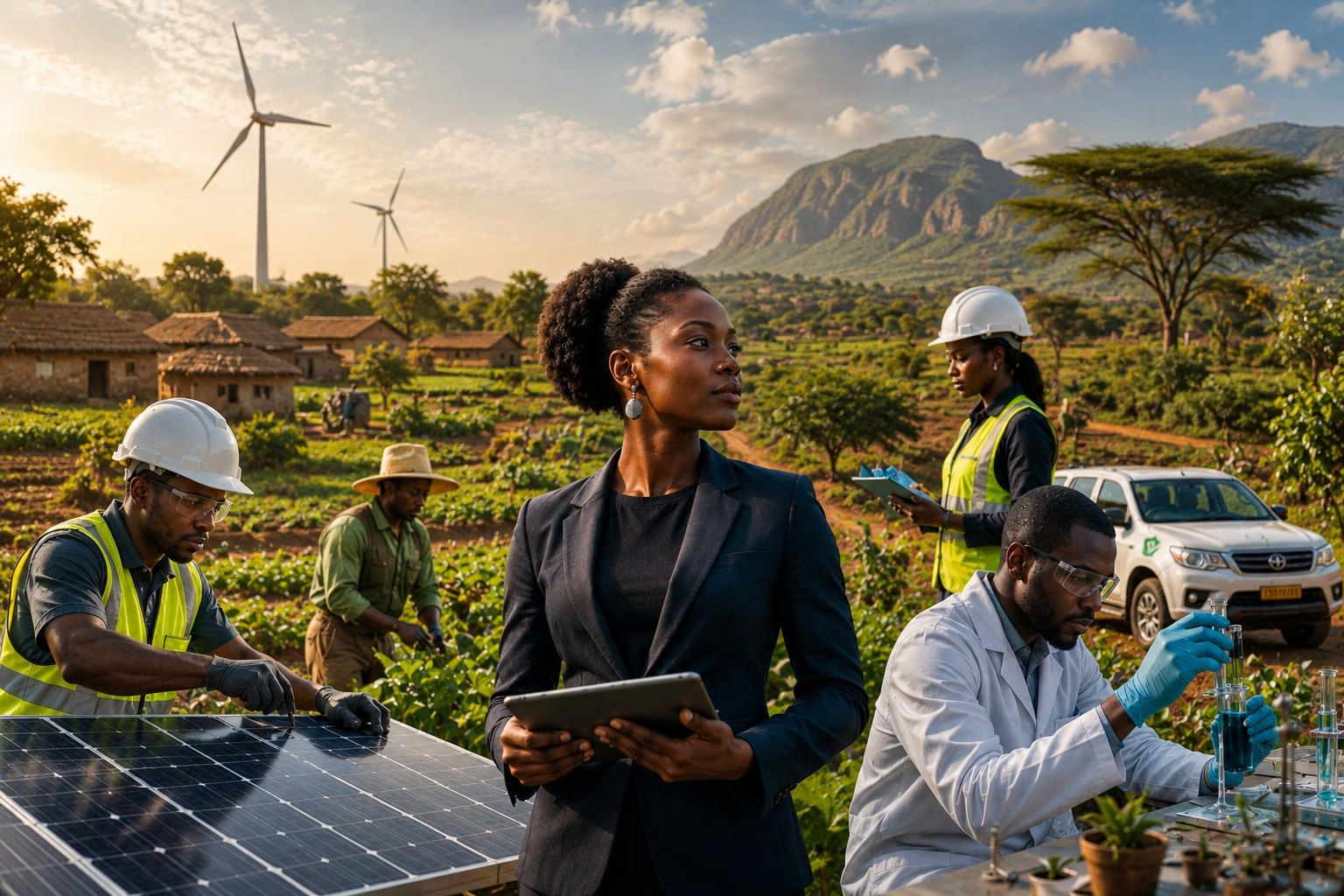
Top 20 Green Jobs Growing in ...
16 Jun 2026
Comments
Subscribe to Our Newsletter


Additional Links
Login Register Contact Certificate Validation Become Instructor About Terms and PoliciesContact US


Reply to Comment